On this page, we will be exploring the history of the old Somerville Police Department as it was formed in 1865, onto their departure from the old Bow St Police Department building in 1932. While searching for historical information concerning the Somerville Police Department, I found a book titled Somerville, Mass.: The Beautiful City of Seven Hills - Its History and Opportunities, published by the Somerville Board of Trade in 1912, which provided a detailed early historical account of the Somerville Police Department and its formation. The three following paragraphs and image are taken from this book and quoted verbatim.
"Under the leadership of Chief Charles A. Kendall, the police department is a well-disciplined and efficient force for the protection of our city. Like other departments of the city, it grows in numbers and importance as the years recede. It is in many respects a model organization, and enjoys the confidence of all good citizens and the fear of law breakers.
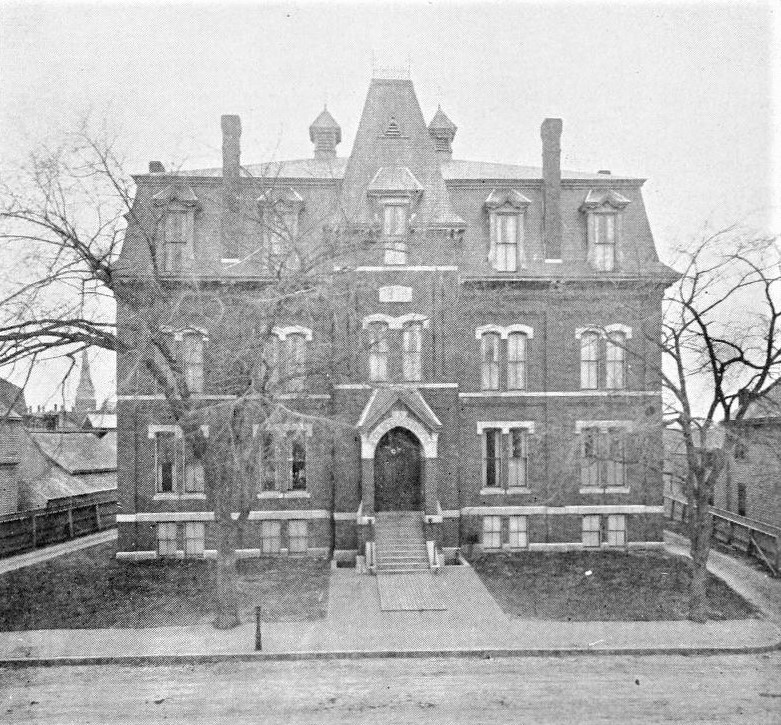
In 1865 a police board was formed, with Town Constable Horace B. Runey as chairman, and Jairus Mann, who had been a constable from 1858. September 6, 1867, Robert R. Perry, now captain of police, and James Hanley were appointed permanent night watch. The force was reorganized in 1871 and enlarged to thirteen men. Upon the organization of the first city government, in 1872, Melville C. Parkhurst was appointed chief of police, holding the position until 1908, when he was retired on a pension. February 1, 1873, Robert R. Perry was made captain of police, which rank he has held uninterruptedly to the present time, with the distinction of being the oldest officer, in point of service, in the department. The office of lieutenant was created in 1875. In 1877 the police force was twenty-four men. September 1, 1888, the police signal system was established. The emergency ambulance was introduced in 1894. An act of the legislature of 1895 limits the reserve force to ten, and the regular force is recruited from this number when necessary. The present force consists of a chief, captain, three lieutenants, four sergeants, one inspector, fifty-eight patrolmen, eight reserve officers, and three patrol drivers. The Somerville Police Relief Association, of which all the men upon the regular force are members, was organized in 1872, and was incorporated December 19, 1881.
Somerville has always been comparatively free from crime, chiefly because it is a residential place of God-fearing and law-abiding people, where the sale of intoxicating liquors is prohibited by an overwhelming public sentiment, and the police department enforces the liquor laws as well as all other laws. Until 1854 criminal cases were taken to Charlestown or to East Cambridge for trial. From 1854 until 1872 Francis Tufts was trial justice, and for many years cases were tried in his office, corner of Medford and Washington streets. In 1861 the court was removed to what had been the schoolhouse on the corner of Prospect street and Somerville avenue. A police court was established April 23, 1872. Court was held in a room in the city hall until the completion of the police building on Bowstreet, in 1875. This structure, erected at a cost of about $50,000, furnished, was for the accommodation of the police department, the police court, the Somerville Light Infantry, and the overseers of the poor, and contained a large hall for ward and city purposes. The police court is at present presided over by Judge L. Roger Wentworth."
Somerville Board of Trade, Somerville, Mass.: The Beautiful City of Seven Hills—Its History and Opportunities (Somerville, MA: A. Martin & Sons, 1912)
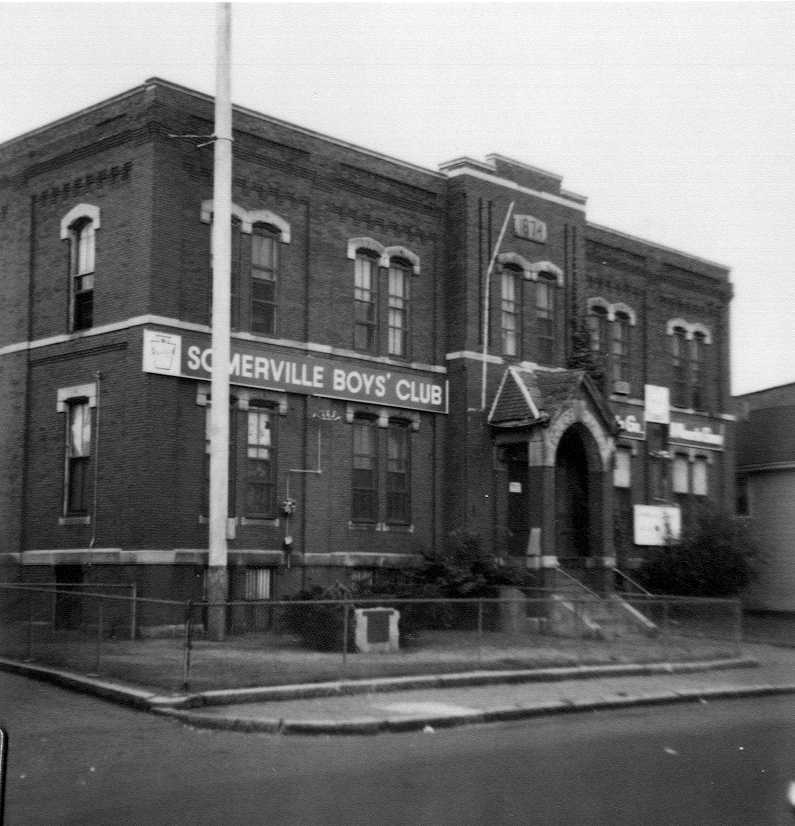
According to a submission into the National Register of Historic Places Inventory Nomination Form entered March 26th, 1976, "The Police Station on Bow Streets stands as one of the first building projects of the newly chartered city of Somerville. The police headquarters were moved to a newer building in 1932, and the original building is currently being used by the Boys' Club and the American Legion." An image of the old Police Station building in this condition can be found on the Massachusetts Cultural Resource Information System (MACRIS). You may notice that the old Victorian style roof of the building was removed during this period before it was re-installed sometime in the early 2000s.